- Home
- /
- Bi-Axial Rotomoulding Machine
Bi-Axial Rotomoulding Machine
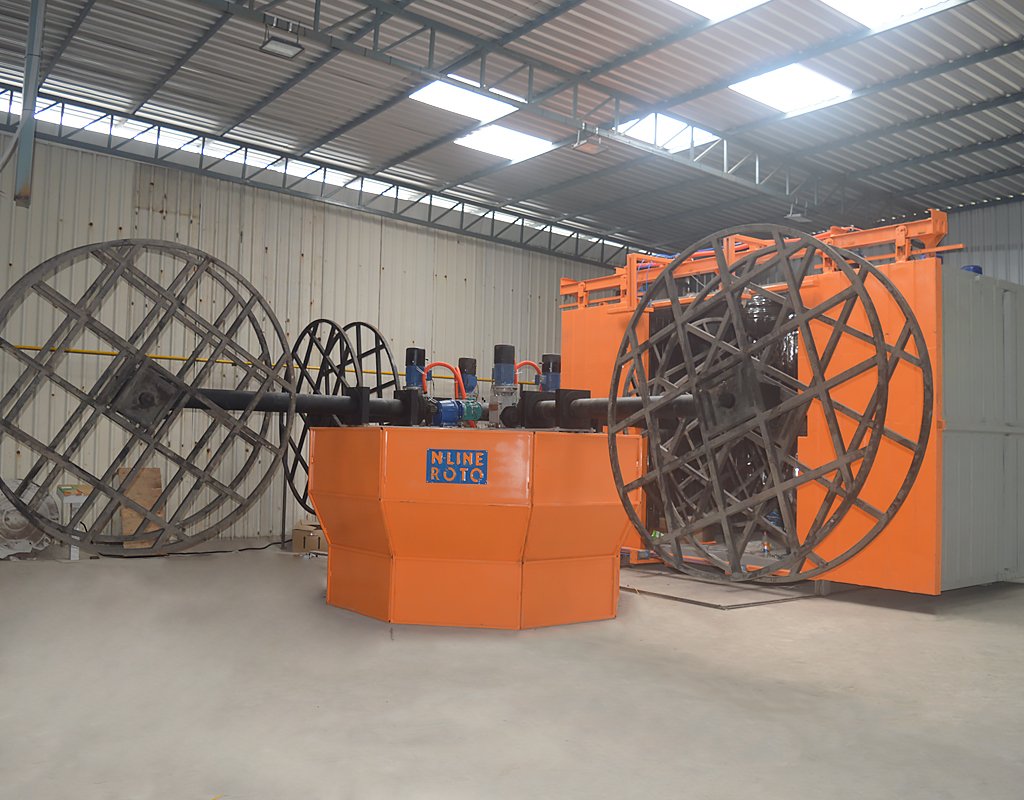
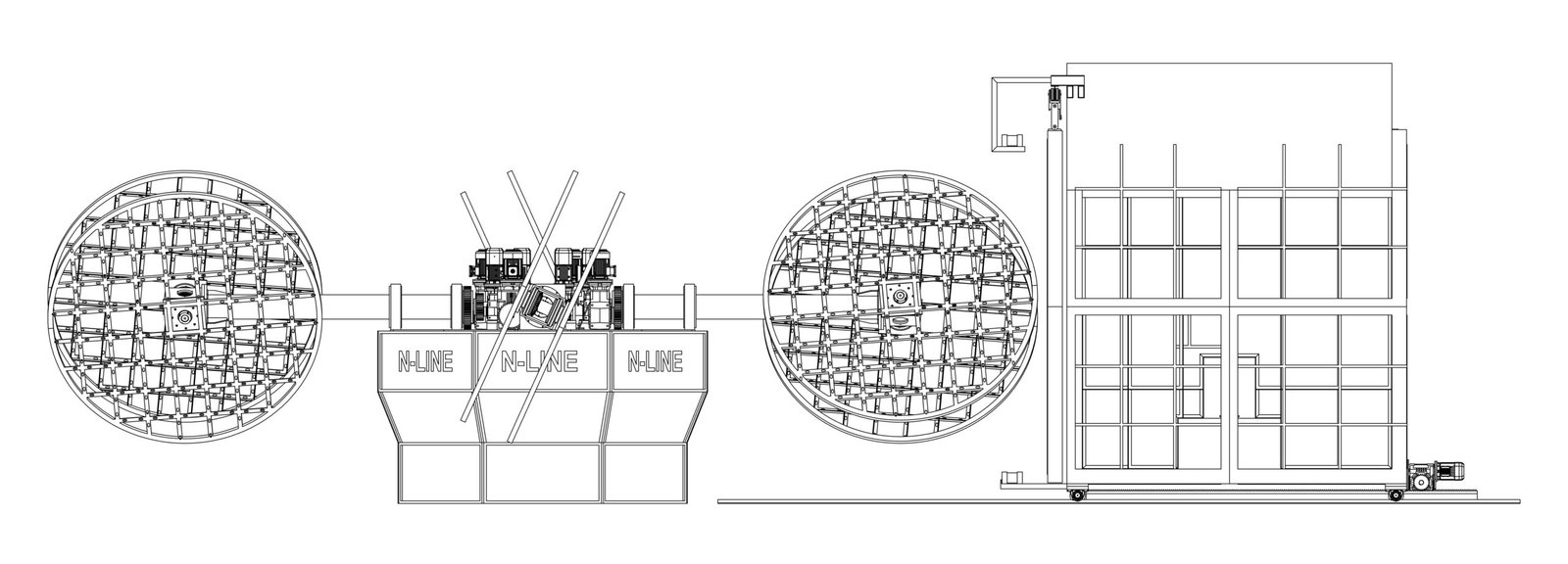
A Bi-Axial Rotomoulding Machine is an advanced industrial machine designed to manufacture hollow plastic products through a rotational molding process where the mold rotates simultaneously on two perpendicular axes. This dual-axis movement ensures uniform distribution of molten plastic material along the entire internal surface of the mold.
Technical Specifications
| Model | Floor Space (Mtrs) | Straight Arm Swing (MM)* | Offset Arm Swing (MM)* | ||||
|---|---|---|---|---|---|---|---|
|
|
L |
W |
H |
Major* |
Minor |
Major* |
Minor |
|
NRP 1000
|
15 |
11 |
7 |
3400 |
1600 |
– |
– |
|
NRP 2000
|
17 |
13 |
8 |
4300 |
1600 |
2900 |
1450 |
|
NRP 5000
|
20 |
14 |
7 |
3800 |
2800 |
3700 |
2300 |
|
NRP 10000 |
25 |
18 |
9 |
4600 |
3600 |
4500 |
2700 |
|
NRP 20000 |
28 |
20 |
10 |
6000 |
3600 |
5700 |
3000 |
Overview of Bi-Axial Rotational Moulding Technology
The technology is widely used for producing high-strength plastic products such as water storage tanks, fuel tanks, containers, playground equipment, chemical storage tanks, and large industrial components. Because the material spreads evenly during the rotation cycle, the final product achieves consistent wall thickness and improved structural stability.
Rotational molding has become one of the most preferred plastic manufacturing methods for producing large hollow products without the need for high injection pressure. With advancements in automation and energy-efficient heating systems, modern bi-axial rotomoulding machines provide improved productivity, better product quality, and reliable long-term operation.
Bi-axial rotational molding technology is based on the principle of heating thermoplastic powder inside a mold while rotating the mold in two directions at the same time. This synchronized movement allows the melted plastic to spread evenly across the internal mold cavity.
Unlike conventional molding methods that rely on pressure to form shapes, the bi-axial rotational molding process uses controlled heat and rotational movement. This approach reduces internal stress within the molded product and creates seamless hollow structures.
The technology is widely used in industries where strong and corrosion-resistant plastic components are required. Because of its ability to produce large and complex shapes, it has become an essential manufacturing solution in several sectors of the plastic industry.
Key Features
Bi-axial rotomoulding machines are engineered to provide reliable performance and efficient production.
Important features include:
- Dual-axis rotational mechanism
- Heavy-duty steel construction
- Uniform heating distribution
- Programmable control systems
- Energy-efficient oven design
- Smooth and stable rotation
- Easy mold installation system
- Adjustable rotation speed
- Efficient cooling arrangement
- Low maintenance operation
These features help manufacturers maintain consistent production quality and minimize operational downtime.
Types of Bi-Axial Rotomoulding Machine
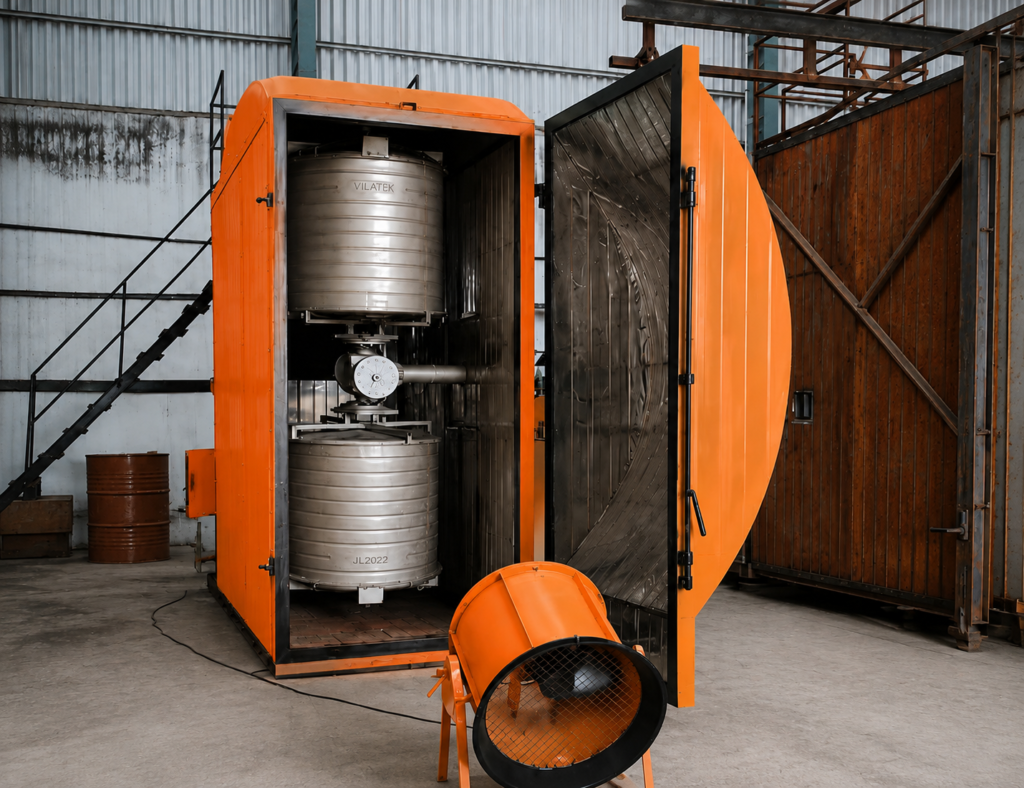
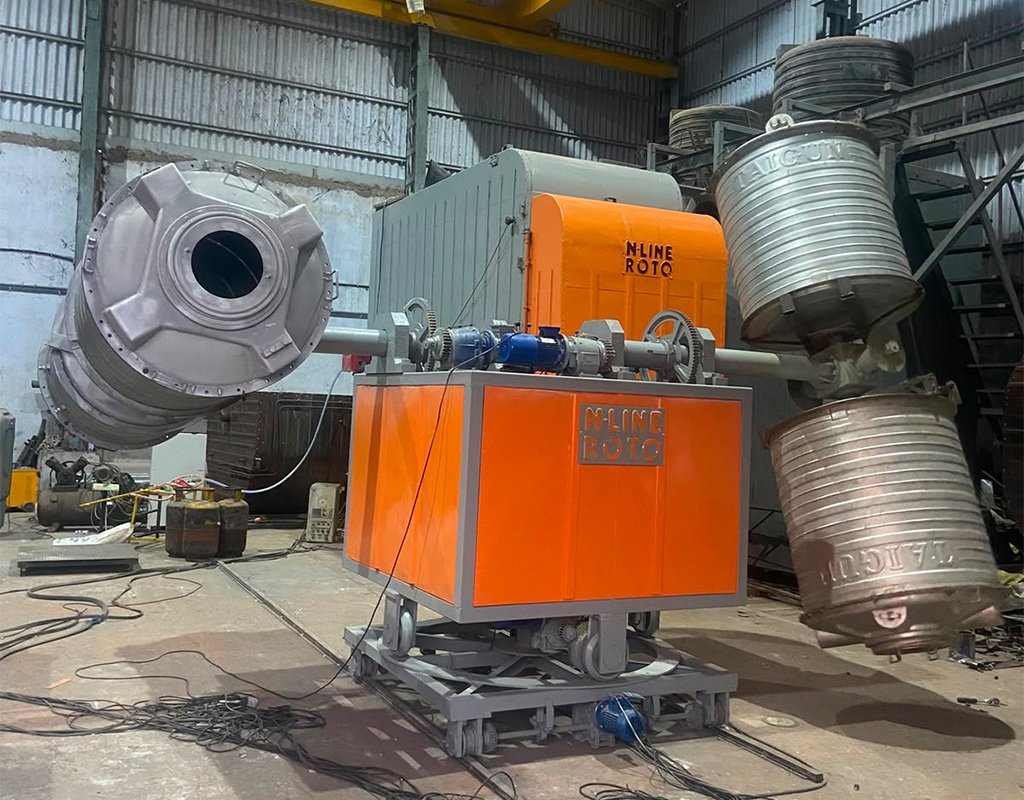
NRP Machine Capacity
| Ltr Capacity VERTICAL | Machine Models | ||||||
|---|---|---|---|---|---|---|---|
|
|
NRP-1000
|
NRP-2000
|
NRP-5000
|
NRP-10000
|
|||
|
200 |
4 |
4 |
10 |
10 |
|||
|
300 |
4 |
4 |
10 |
10 |
|||
|
500 |
4 |
4 |
8 |
10 |
|||
|
750 |
2 |
2 |
4 |
8 |
|||
|
1000 |
2 |
2 |
4 |
8 |
|||
|
1500 |
– |
1 |
2 |
4 |
|||
|
2000 |
– |
1 |
2 |
4 |
|||
|
3000 |
– |
– |
1 |
2 |
|||
|
5000 |
– |
– |
1 |
1 |
|||
|
7000 |
– |
– |
– |
1 |
|||
|
7500 |
– |
– |
– |
1 |
|||
|
8000 |
– |
– |
– |
1 |
|||
|
10000 |
– |
– |
– |
1 |
|||
Working Principle
The working process of a bi-axial rotomoulding machine follows a sequence of heating, rotation, and cooling operations.
Material Loading
The process begins with loading a measured quantity of polymer powder into the mold. The quantity of material determines the final wall thickness of the product.
Dual-Axis Rotation and Heating
Once the mold is closed, it is placed inside a heating chamber where it rotates slowly along two axes.
Cooling Phase
After the plastic material has spread uniformly and achieved the desired thickness, the mold is transferred to a cooling station.
Product Removal
When the molded product has completely solidified, the mold is opened and the finished component is removed.
Continuous rotation during heating and cooling ensures proper material distribution and stable product structure.
Machine Construction and Components
A bi-axial rotomoulding machine includes several key components designed to perform the molding cycle efficiently.
Rotating Arm Assembly
The rotating arm supports the mold and enables synchronized movement on two axes. This motion ensures even coating of molten plastic.
Heating Oven
The heating oven provides the required temperature for melting thermoplastic powder inside the mold.
Cooling Chamber
The cooling system reduces the mold temperature gradually while maintaining rotational movement to prevent material sagging.
Mold System
Molds are generally fabricated from aluminum or steel and determine the shape and size of the final product.
Drive Mechanism
Electric motors, gearboxes, and chain systems control the speed and direction of mold rotation.
Control Panel
Modern machines use programmable logic control systems to monitor temperature, cycle time, and rotational speed.
Industrial Applications

Water Storage

Agriculture

Automotive

Construction

Marine
Advantages of Bi-Axial Rotomoulding Machines
Bi-axial rotomoulding machines offer several manufacturing benefits.
Uniform Material Distribution
Dual-axis rotation ensures even distribution of plastic material.
Seamless Product Structure
Products are formed in a single piece without joints.
Flexible Product Design
Complex shapes and large hollow products can be manufactured easily.
Cost-Effective Tooling
Molds used in rotational molding are generally more economical.
Limitations of Bi-Axial Rotomoulding Machines
Despite its advantages, bi-axial rotomoulding also has some limitations.
Longer Cycle Time
Production cycles are generally longer compared to injection molding processes.
Limited Material Range
The process mainly uses polyethylene materials.
Energy Consumption
Heating chambers may require significant energy depending on machine capacity.
Lower Production Speed
Compared to high-pressure molding processes, output speed may be lower.
Why Choose N Line Roto Pvt. Ltd.
N Line Roto Pvt. Ltd., formerly known as Neelam Roto Plast, was established in 1993 and has built strong expertise in rotational molding machinery and plastic processing equipment.
The company provides a wide range of rotomoulding machinery along with pulveriser machines, extruder machines, and related industrial solutions. With a strong focus on quality manufacturing and customer satisfaction, the organization delivers reliable machines designed for long-term industrial use.
Key strengths include:
- Advanced manufacturing infrastructure
- Skilled engineers and technicians
- Custom machine design solutions
- Turnkey project execution
- Technical consultancy and troubleshooting support
- Global export presence
Under the leadership of Mr. Dinesh Panchal, the company continues to develop innovative machinery solutions for clients in the plastic manufacturing industry.
Frequently Asked Questions (FAQs)
It is a rotational molding machine where the mold rotates simultaneously on two axes to distribute molten plastic evenly.
Polyethylene materials such as LLDPE and HDPE are most commonly used.
Products like water tanks, chemical tanks, containers, kayaks, and playground equipment can be produced.
Dual-axis rotation ensures uniform wall thickness and structural stability.
Industries include agriculture, automotive, construction, water storage, and marine sectors.
Cycle time generally ranges from 20 to 60 minutes depending on product size.
Yes, the process produces products without joints or weld lines.
Machines may use gas-based or electric heating systems.
Rotational molding molds are usually more economical compared to other molding processes.
Yes, machines can be customized based on mold size and production capacity.
Regular inspection of motors, heating systems, bearings, and control panels.
Yes, they offer excellent resistance to corrosion, chemicals, and environmental stress.
Yes, metal inserts can be integrated during the molding process.
It produces minimal material waste compared to many plastic manufacturing processes.
Yes, the process is particularly suitable for large hollow structures.
Machines are available in semi-automatic and fully automatic configurations.
It solidifies the molded product while maintaining rotation.
No, rotational molding works without high injection pressure.
The amount of raw material loaded into the mold determines thickness.
Yes, carousel machines are designed for large-scale industrial production.
Related Products
Lab Rotomoulding Machine
A Lab Rotomoulding Machine is a compact and precision-engineered rotational molding system specifically designed for research, product development, material testing, educational institutions, and small-scale production.
Clamshell Rotomoulding Machine
A Clamshell Rotomoulding Machine is a highly efficient rotational molding system designed for manufacturing hollow plastic products of various shapes and sizes.
Rock N Roll Rotomoulding Machine
Home / Rock N Roll Rotomoulding Machine Rock N Roll Rotomoulding Machine A Rock N Roll Rotomoulding Machine is a…