- Home
- /
- Rotational Rotomoulding Machine
Rotational Rotomoulding Machine
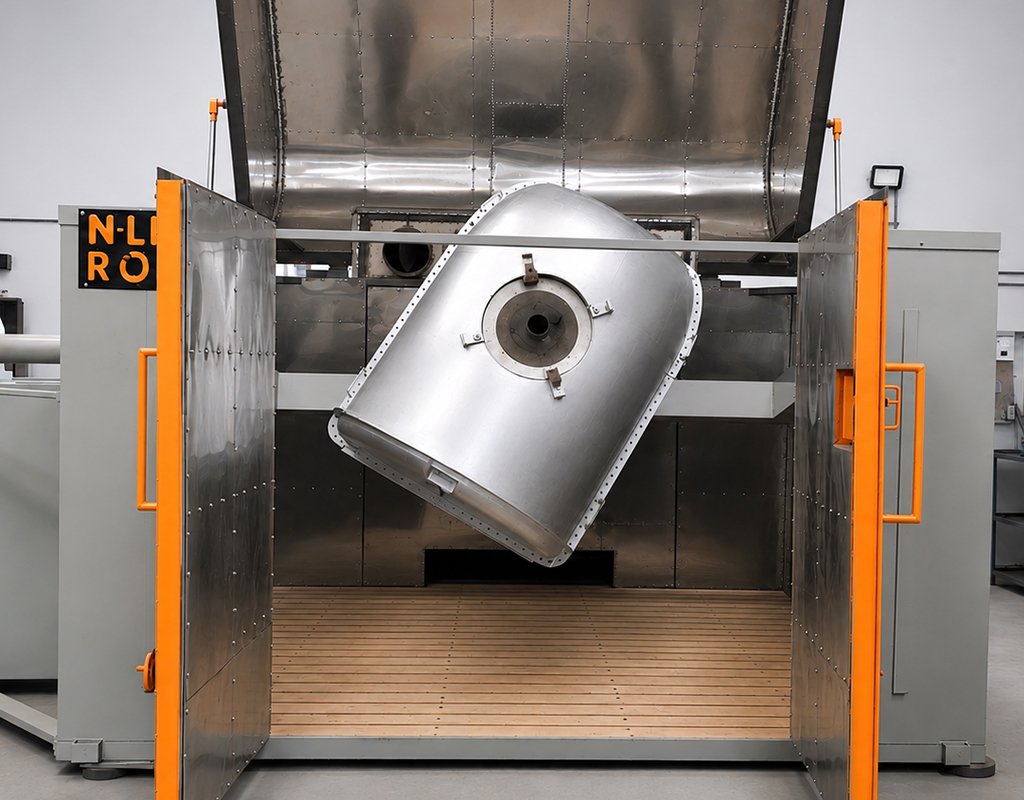
A Rotational Rotomoulding Machine is an industrial system designed to manufacture hollow plastic products using the rotational molding technique. This manufacturing method is widely used for producing durable plastic products such as storage tanks, containers, road barriers, kayaks, playground equipment, and several industrial components.
Technical Specifications
| Model | Floor Space (Mtrs) | Straight Arm Swing (MM)* | Offset Arm Swing (MM)* | ||||
|---|---|---|---|---|---|---|---|
|
|
L |
W |
H |
Major* |
Minor |
Major* |
Minor |
|
NRP 1000
|
15 |
11 |
7 |
3400 |
1600 |
– |
– |
|
NRP 2000
|
17 |
13 |
8 |
4300 |
1600 |
2900 |
1450 |
|
NRP 5000
|
20 |
14 |
7 |
3800 |
2800 |
3700 |
2300 |
|
NRP 10000 |
25 |
18 |
9 |
4600 |
3600 |
4500 |
2700 |
|
NRP 20000 |
28 |
20 |
10 |
6000 |
3600 |
5700 |
3000 |
Understanding the Rotational Moulding Machine
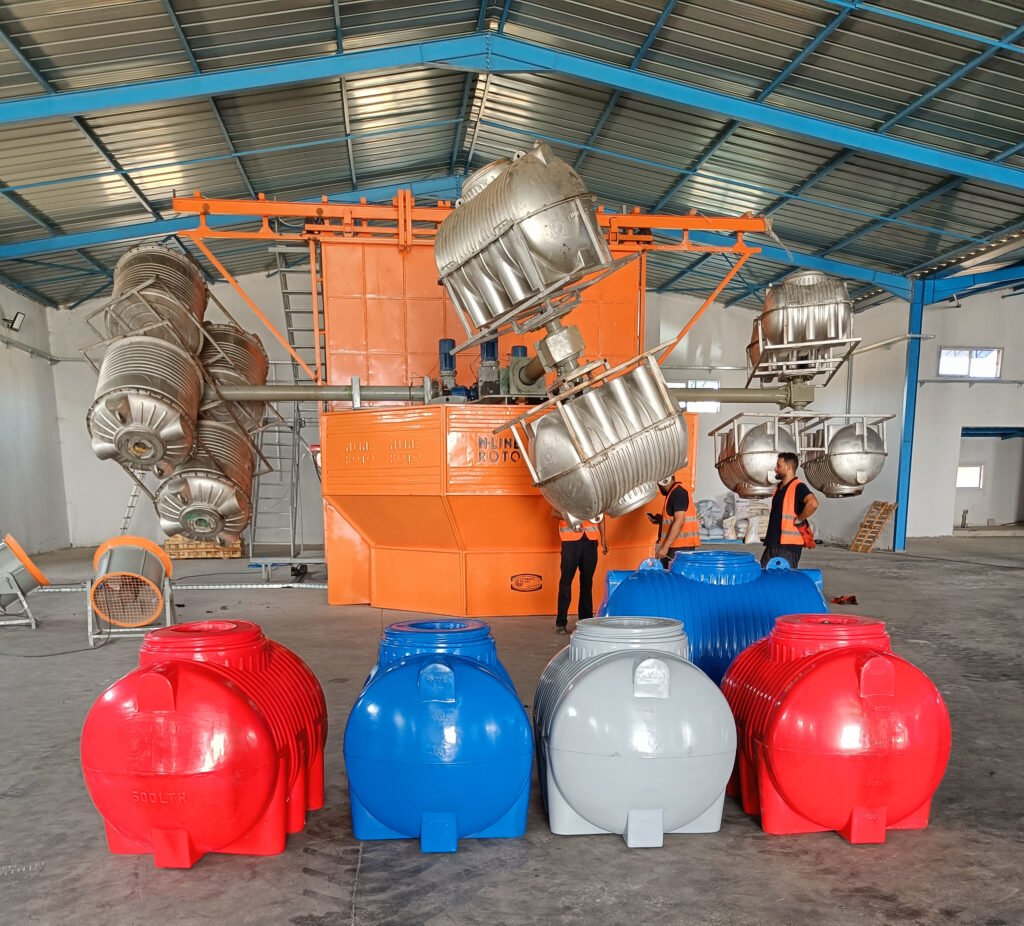
The process involves placing a specific quantity of polymer powder inside a mold which is then rotated inside a heated chamber. As the mold rotates along two axes, the plastic powder melts and spreads evenly along the internal surface of the mold cavity. This process forms a hollow plastic structure with uniform thickness and strong mechanical properties.
Rotational molding has gained popularity across the plastic industry because it allows manufacturers to produce complex hollow shapes without applying high pressure. The process also minimizes material wastage and ensures structural strength, making it suitable for manufacturing large industrial products.
Modern rotomoulding machines are equipped with advanced control systems, energy-efficient heating chambers, and automated rotation mechanisms that enable consistent production quality and higher manufacturing efficiency.
A rotational moulding machine is specifically engineered to convert thermoplastic raw materials into hollow molded products through controlled heating and rotational movement.
In this system, plastic powder such as polyethylene or polypropylene is loaded into a metal mold. The mold is then heated while rotating slowly on two axes. During this process, the polymer melts and adheres to the inner walls of the mold, gradually forming a consistent layer.
After sufficient melting and distribution of material, the mold is transferred to a cooling zone where the product solidifies while still rotating. Once the cooling stage is completed, the mold is opened and the finished component is removed.
This process produces seamless products without joints or weld lines and is particularly suitable for large hollow structures where uniform wall thickness is required.
Key Features
Rotational molding machines are designed with several technical features that improve performance and operational reliability.
- Heavy-duty structural frame
- Dual-axis rotational mechanism
- Uniform heat distribution
- Energy-efficient heating system
- PLC-based control system
- Efficient cooling arrangement
- Easy mold mounting and removal
- Stable operation with minimal vibration
- Flexible machine configurations
- Low maintenance requirements
These features help manufacturers achieve consistent product quality and higher productivity.
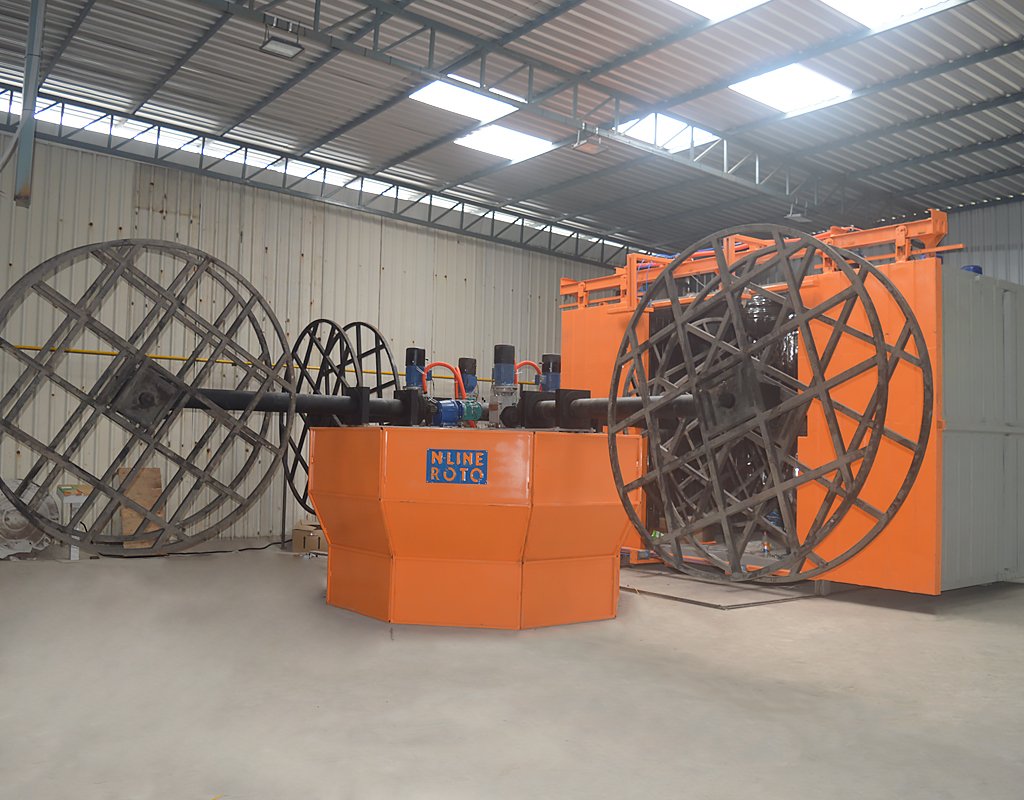
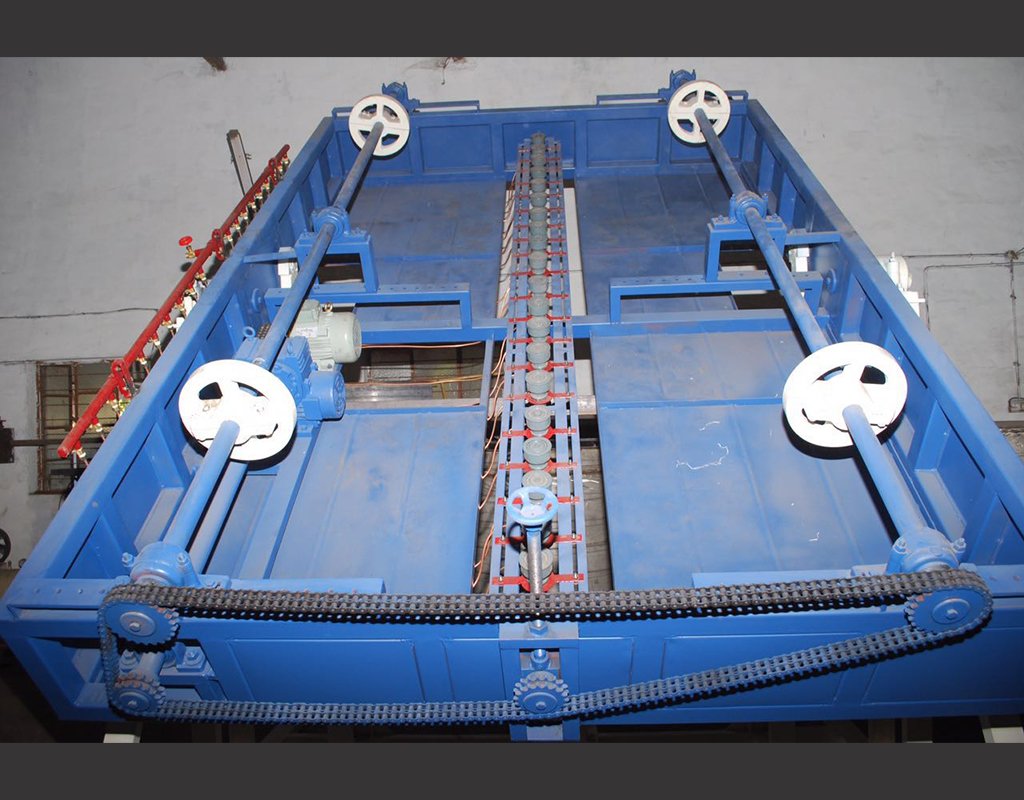
Types of Rotational Moulding Machines
NRP Machine Capacity
| Ltr Capacity VERTICAL | Machine Models | ||||||
|---|---|---|---|---|---|---|---|
|
|
NRP-1000
|
NRP-2000
|
NRP-5000
|
NRP-10000
|
|||
|
200 |
4 |
4 |
10 |
10 |
|||
|
300 |
4 |
4 |
10 |
10 |
|||
|
500 |
4 |
4 |
8 |
10 |
|||
|
750 |
2 |
2 |
4 |
8 |
|||
|
1000 |
2 |
2 |
4 |
8 |
|||
|
1500 |
– |
1 |
2 |
4 |
|||
|
2000 |
– |
1 |
2 |
4 |
|||
|
3000 |
– |
– |
1 |
2 |
|||
|
5000 |
– |
– |
1 |
1 |
|||
|
7000 |
– |
– |
– |
1 |
|||
|
7500 |
– |
– |
– |
1 |
|||
|
8000 |
– |
– |
– |
1 |
|||
|
10000 |
– |
– |
– |
1 |
|||
Working Principle
The functioning of a rotational molding machine is based on controlled heat transfer combined with biaxial rotation.
Material Charging
The manufacturing cycle begins with loading the required quantity of polymer powder into the mold cavity. The quantity of powder determines the thickness of the final product.
Heating and Rotation
The mold is placed in a heating chamber where it rotates slowly on two perpendicular axes. As the temperature increases, the plastic powder melts and spreads across the mold surface.
Cooling Phase
After the polymer forms a uniform coating inside the mold, the mold is transferred to a cooling chamber. Cooling may be achieved using air circulation or water spray.
Product Removal
Once the material solidifies, the mold is opened and the finished hollow product is removed. The machine is then ready for the next cycle.
Continuous rotation during heating and cooling ensures proper material distribution and uniform structural properties.
Machine Mechanism
A rotomoulding machine consists of multiple mechanical and thermal components that work together to complete the molding cycle.
Rotating Arm
The rotating arm supports the mold and enables dual-axis movement, ensuring uniform distribution of molten plastic.
Heating Chamber
The heating chamber generates the required temperature for melting plastic powder inside the mold.
Cooling Zone
The cooling chamber allows the product to solidify gradually while maintaining rotational movement.
Mold Assembly
The mold determines the shape and design of the final product and must be engineered with precision.
Drive System
Motors and gear systems control the rotation speed and direction of the mold during the production cycle.
Control System
Modern machines use programmable control panels to regulate temperature, rotation speed, and cycle timing for efficient production.
Industrial Applications

Water Storage

Agriculture

Automotive

Construction

Marine
Advantages of Rotational Moulding Machines
Rotational molding machines provide several operational advantages.
Uniform Wall Thickness
Continuous rotation distributes material evenly, resulting in consistent wall thickness.
Seamless Construction
Products are produced as a single piece without welding or joints.
Low Tooling Cost
Compared to other molding technologies, mold costs are relatively economical.
Design Flexibility
The process allows complex hollow shapes to be produced easily.
Limitations of Rotational Moulding Machines
Although rotational molding has several advantages, certain limitations should also be considered.
Longer Production Cycle
Rotomoulding cycles are generally longer compared to injection molding or blow molding processes.
Limited Material Options
The process mainly supports polyethylene and similar thermoplastics.
Surface Detailing Constraints
Very fine surface details or extremely thin sections may be difficult to achieve.
Manual Handling in Some Systems
Certain machine configurations may still require manual mold handling depending on automation level.
Why Choose N Line Roto Pvt. Ltd.
N Line Roto Pvt. Ltd., formerly known as Neelam Roto Plast, was established in 1993 and has developed significant expertise in rotational molding technology. The company is engaged in manufacturing rotomoulding machinery, pulverizer machines, extruders, and other allied equipment for the plastic industry.
With years of experience and a strong focus on quality manufacturing, the organization provides reliable machinery solutions supported by modern engineering practices.
Some key strengths include:
- Advanced manufacturing infrastructure
- Experienced engineers and technicians
- Customized machinery solutions
- Turnkey project execution
- Technical consultancy and troubleshooting support
- Global export capabilities
Under the leadership of Mr. Dinesh Panchal, the organization has built a strong reputation for delivering dependable machinery solutions to clients in various industries.
The company also provides installation support, process consultancy, and assistance for new rotomoulding ventures.
Frequently Asked Questions (FAQs)
It is used to manufacture hollow plastic products such as tanks, containers, playground equipment, and industrial storage systems.
Polyethylene materials such as LLDPE, HDPE, and sometimes polypropylene are commonly used.
Products like water tanks, fuel tanks, dustbins, kayaks, septic tanks, and chemical storage containers can be produced.
The production cycle usually ranges from 20 to 60 minutes depending on the product size and material thickness.
No, rotational molding works without high pressure and relies on heat and rotation.
The main stages include material loading, heating and rotation, cooling, and product removal.
Heating systems may use gas burners, electric heaters, or open flame heating depending on machine design.
Yes, the process produces seamless hollow products without joints or welds.
Compared to other molding processes, rotomoulding molds are generally more economical.
Industries such as agriculture, automotive, construction, marine, and water storage use these machines.
Biaxial rotation ensures even material distribution and consistent wall thickness.
Yes, a wide variety of pigments can be added to produce products in different colors.
Regular inspection of motors, heating systems, bearings, and control panels is required for efficient operation.
Yes, rotomoulded products are known for their high durability and resistance to chemicals and environmental stress.
Yes, metal inserts and fittings can be incorporated into the mold during production.
The process generates very little material waste compared to many other plastic manufacturing processes.
Yes, machines can be designed with customized arm lengths, mold sizes, and heating systems.
Operators should have basic technical knowledge of temperature control, cycle timing, and machine operation.
Yes, carousel and multi-arm machines are designed for high-volume industrial production.