Plastic Fuel Tank Mould
- Home
- /
- Plastic Fuel Tank Mould
Fuel storage systems are critical components across automotive, industrial, agricultural, and marine sectors. Plastic fuel tanks have become increasingly popular due to their lightweight construction, corrosion resistance, and design flexibility. These tanks are commonly used for storing petrol, diesel, and other liquid fuels in a safe and efficient manner.
The manufacturing of such tanks requires specialized tooling known as Plastic Fuel Tank Moulds. These moulds are designed to produce hollow, leak-proof containers using the rotational molding process. Since fuel tanks must meet strict safety and durability standards, the mould design plays a crucial role in ensuring structural integrity, chemical resistance, and long-term reliability.
High-quality moulds enable manufacturers to produce fuel tanks with consistent thickness, seamless construction, and high performance under demanding conditions.
Understanding Plastic Fuel Tank Moulds
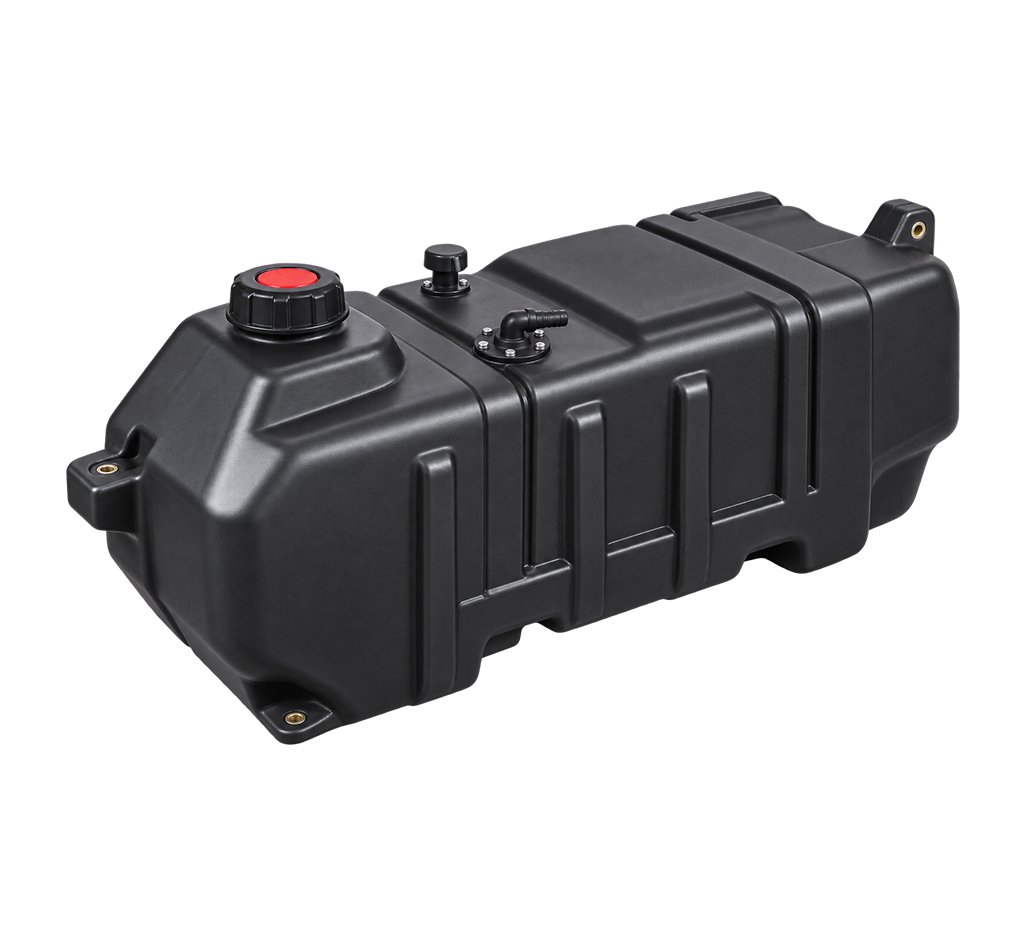
A plastic fuel tank mould is a precision-engineered metal mould used to manufacture fuel tanks through rotational molding. The mould forms the entire structure of the tank, including its shape, capacity, mounting provisions, and reinforcement features.
The design incorporates critical elements such as inlet and outlet openings, threaded connections, support ribs, and mounting points. These features ensure that the final product meets functional and safety requirements.
Fuel tank moulds are typically made from mild steel or aluminum, offering strength and efficient heat transfer. Proper mould engineering ensures uniform wall thickness, resistance to fuel chemicals, and the ability to withstand pressure and mechanical stress.
Key Features
Plastic fuel tank moulds are designed with features that support high-quality manufacturing.
- Heavy-duty construction for long service life
- Precision cavity design for accurate dimensions
- Uniform heat distribution
- Reinforced structural design
- Leak-proof product formation
- Strong clamping system
- Resistance to thermal stress
- Compatibility with rotomoulding machines
- Customizable tank designs and capacities
- Low maintenance requirements
These features ensure consistent production of durable fuel tanks.
Technical Specifications
| Specification | Details |
|---|---|
|
Mold Material |
Mild Steel / Aluminum |
|
Manufacturing Method |
Fabrication / CNC Machining |
|
Tank Capacity |
Customizable |
|
Structure |
Multi-Part Mold |
|
Surface Finish |
Smooth / Textured |
Working Principle
Plastic fuel tanks are manufactured using the rotational molding process.
Material Loading
A measured quantity of polyethylene powder is placed inside the mould.
Heating and Rotation
The mould is mounted on a rotating arm and placed in a heating chamber. It rotates along two axes while the material melts.
Material Distribution
The molten plastic coats the internal surfaces uniformly, forming the tank structure.
Cooling Phase
The mould is moved to a cooling station where the plastic solidifies.
This process ensures a seamless and leak-proof tank structure.
Construction and Design Mechanism
The design of fuel tank moulds focuses on safety, durability, and precision.
Mold Body
Defines the overall shape, size, and capacity of the fuel tank.
Reinforcement Structure
Includes ribs and supports to enhance strength and pressure resistance.
Parting Line
Multi-part mould structure allows easy removal of the tank.
Clamping System
Ensures tight sealing during the molding process.
Venting System
Allows air and gases to escape during heating.
Mounting Arrangement
Connects the mould securely to the rotomoulding machine.
Industrial Applications

Industrial

Agriculture

Automotive

Construction

Marine
Advantages of Plastic Fuel Tank Mould
Plastic fuel tank moulds offer several advantages in manufacturing.
Seamless Construction
Rotational molding produces leak-proof tanks without joints.
Chemical Resistance
Plastic tanks resist corrosion from fuels and chemicals.
Lightweight Design
Easier to handle and transport compared to metal tanks.
Uniform Wall Thickness
Ensures consistent strength and durability.
Limitations of Plastic Fuel Tank Mould
Despite their benefits, these moulds have certain limitations.
Longer Production Cycle
Rotational molding requires more time compared to other processes.
Mold Weight
Large moulds may require lifting equipment.
Limited Material Range
Primarily supports polyethylene materials.
Initial Investment
High-quality moulds require significant upfront cost.
Why Choose N Line Roto Pvt. Ltd.
N Line Roto Pvt. Ltd., formerly known as Neelam Roto Plast, was established in 1993 and has extensive experience in manufacturing rotational molding machines and moulds. The company offers a complete range of rotomoulding solutions for plastic product manufacturing industries.
With advanced production facilities and a skilled workforce, the company delivers high-quality moulds and machines that meet industry standards. It also provides installation, training, and turnkey project support.
Under the leadership of Mr. Dinesh Panchal, the company has expanded its presence in domestic and international markets, serving various industries with reliable and efficient solutions.
Frequently Asked Questions (FAQs)
It is used to manufacture plastic fuel tanks through rotational molding.
Mild steel and aluminum are commonly used.
Polyethylene materials such as LLDPE are typically used.
Yes, they are designed to meet safety and durability standards.
By adjusting the amount of plastic powder used.
Yes, molds can be designed according to specific requirements.
The mould is opened after cooling and the tank is removed.
They are designed according to machine specifications.
Regular cleaning and inspection are recommended.
Yes, molds allow flexible design options.
Yes, plastic tanks resist rust and chemical damage.
Automotive, industrial, agriculture, marine, and construction sectors.
With proper maintenance, they last for many production cycles.
Yes, specialized moulds support multi-layer construction.
Yes, due to seamless construction.
Some modifications may be possible.
Smooth and textured finishes.
Yes, they are designed for long-term use.
Yes, it is ideal for producing durable hollow structures.
It produces strong, seamless, and chemical-resistant tanks.
Conclusion
Plastic fuel tank moulds play a vital role in manufacturing durable, safe, and efficient fuel storage solutions. Through the rotational molding process, these moulds enable the production of seamless, corrosion-resistant, and high-performance tanks suitable for various industries.
With proper mould design and high-quality materials, manufacturers can produce fuel tanks that meet strict safety standards and operational requirements. These moulds are essential for ensuring consistent quality and efficiency in modern plastic manufacturing processes.