- Home
- /
- Floater Rotomoulding Mould
Floater Rotomoulding Mould
A Floater Rotomoulding Mould is a specially designed mold used in the rotational molding process to manufacture hollow plastic floaters with excellent buoyancy, durability, and dimensional accuracy. These molds are engineered to produce seamless products that can withstand harsh environmental conditions, continuous water exposure, UV radiation, and mechanical impact.
Floaters manufactured through rotational molding are widely used in marine applications, aquaculture, floating docks, navigation systems, offshore projects, water sports equipment, and industrial flotation systems.
Rotational molding technology allows manufacturers to produce floaters with uniform wall thickness, complex geometries, and high structural strength without welding or joining operations. This manufacturing process improves product performance while reducing maintenance requirements and production costs.
Modern Floater Rotomoulding Moulds are manufactured using advanced engineering techniques to ensure precision, repeatability, and long service life.
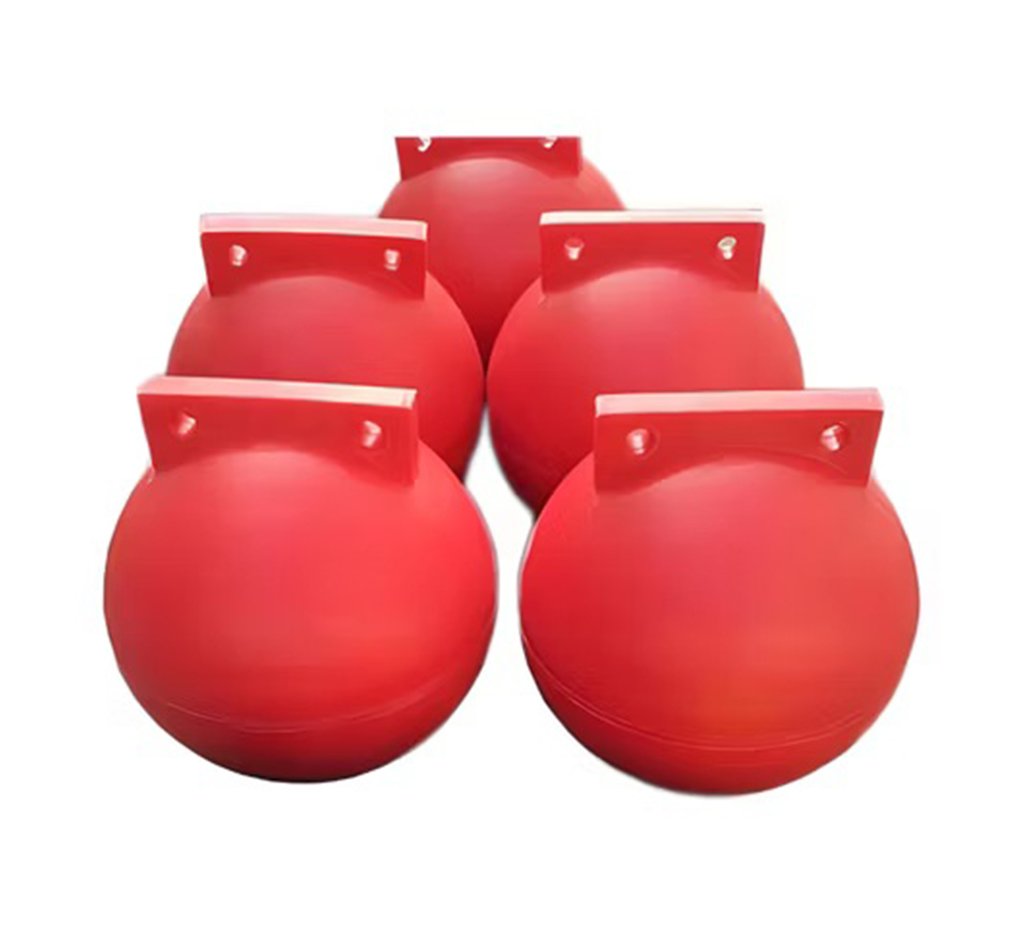
Overview of Floater Rotational Molding Technology
Floater rotational molding technology is designed to manufacture lightweight yet durable hollow products that provide excellent flotation characteristics.
The process begins by loading a predetermined quantity of polymer powder into the mold. The mold is then heated while rotating simultaneously on two axes. As the material melts, it coats the internal surface of the mold evenly.
After cooling, the molded floater is removed from the mold as a seamless, one-piece product. This process eliminates joints and weak points, improving the overall strength and reliability of the floater.
The technology enables manufacturers to produce customized flotation products with different shapes, sizes, and buoyancy capacities.
Key Features
Floater Rotomoulding Moulds offer several advantages that improve manufacturing performance.
- Precision-engineered mold design
- Uniform wall thickness production
- Seamless product manufacturing
- Excellent dimensional accuracy
- Durable mold construction
- Corrosion-resistant materials
- Long operational life
- Easy mold handling
- Excellent surface finish
- Low maintenance requirements
- Custom mold development
- High production repeatability
These features help manufacturers achieve consistent product quality and reliable production.
Working Principle
The manufacturing process follows several controlled stages.
Material Loading
Polyethylene powder is placed inside the floater mold according to the required wall thickness and buoyancy specifications.
Heating Process
The mold is mounted on the rotational molding machine and transferred to the heating chamber. The mold rotates continuously during heating, allowing the plastic material to melt and spread uniformly.
Cooling Cycle
After the heating cycle is completed, the mold is transferred to the cooling station. Controlled cooling solidifies the product while maintaining its dimensional stability.
Product Removal
Once the floater has completely cooled, the mold is opened, and the finished product is removed. The mold is then prepared for the next production cycle.
Mould Structure and Components
Floater Rotomoulding Moulds are manufactured using several precision-engineered components.
Mould Body
The main structure determines the final shape, dimensions, and buoyancy characteristics of the floater.
Split Mould Design
The mold is divided into sections to simplify product removal and reduce cycle time.
Venting System
The venting mechanism allows pressure equalization during the heating and cooling stages.
Mounting Assembly
The mounting system securely attaches the mold to the rotational molding machine.
Locking Mechanism
Heavy-duty clamps and fasteners keep the mold securely closed during operation.
Surface Finish
The internal mold surface determines the appearance and texture of the finished floater.
Industrial Applications

Marine Industry

Aquaculture

Offshore Industry

Water Sports

Industrial
Advantages of Floater Rotomoulding Mould
Excellent Buoyancy Performance
The mold design helps manufacture products with optimized flotation characteristics.
Seamless Construction
Rotational molding produces one-piece products without joints or welds.
Superior Strength
Uniform material distribution improves impact resistance and structural integrity.
Design Flexibility
Manufacturers can produce floaters in various shapes and dimensions.
Corrosion Resistance
Rotomoulded floaters provide excellent resistance to water, chemicals, and environmental conditions.
Low Maintenance
The finished products require minimal maintenance throughout their service life.
Limitations of Floater Rotomoulding Mould
Despite their advantages, certain limitations should be considered.
Longer Development Time
Custom mold manufacturing may require additional engineering and production time.
Initial Tooling Investment
Large and complex molds may involve higher manufacturing costs.
Product-Specific Design
Each mold is designed for a particular floater configuration.
Skilled Engineering Required
Proper mold design is essential for achieving the desired flotation characteristics.
Why Choose N Line Roto Pvt. Ltd.
N Line Roto Pvt. Ltd., formerly known as Neelam Roto Plast, has been providing advanced rotational molding solutions since 2006.
The company specializes in manufacturing rotomoulding machines, customized molds, pulveriser machines, extrusion systems, and complete turnkey solutions for the plastics industry.
Key Strengths
- Modern manufacturing infrastructure
- Experienced engineering team
- Customized mold development
- Advanced production technology
- High-quality materials
- Technical consultancy
- Reliable after-sales support
- Global export capabilities
Under the leadership of Mr. Dinesh Panchal, the company continues to deliver innovative and reliable solutions for the rotational molding industry.
Frequently Asked Questions (FAQs)
It is a specialized mold used to manufacture hollow plastic floaters through the rotational molding process.
LLDPE, MDPE, and HDPE are commonly used.
Marine, aquaculture, offshore, water sports, and industrial sectors.
Yes, they are manufactured as a single piece without joints.
Yes, molds can be developed according to specific dimensions and buoyancy requirements.
Dock floaters, marine floaters, aquaculture floaters, and industrial flotation products.
Mild steel and aluminum are commonly used.
Yes, they offer excellent resistance to water, chemicals, and weather.
Yes, the process is ideal for manufacturing both small and large flotation products.
Wall thickness is determined by the amount of polymer powder loaded into the mold.
Product dimensions, wall thickness, and internal volume determine buoyancy.
Routine mold inspection and cleaning are recommended.
Yes, customized surface finishes can be developed.
Yes, they are designed for continuous industrial production.
Because it produces durable, lightweight, and seamless products with excellent flotation performance.
Yes, inserts and additional fittings can be integrated during production.
Yes, UV-resistant materials can be used during manufacturing.
Yes, molds can be designed according to customer requirements.
It enables the production of durable, lightweight, and high-performance flotation products.
Because of its extensive industry experience, customized engineering solutions, advanced manufacturing capabilities, and dependable technical support.