Plastic Dustbin Rotomoulding Mould
- Home
- /
- Plastic Dustbin Rotomoulding Mould
Efficient waste management is essential for maintaining cleanliness and environmental hygiene in residential, commercial, and industrial areas. Plastic dustbins are widely used due to their durability, corrosion resistance, and ease of handling. These dustbins are manufactured using advanced processes such as rotational molding, which requires specialized tooling known as Plastic Dustbin Rotomoulding Moulds.
These moulds are designed to produce hollow plastic containers with consistent wall thickness and strong structural integrity. Since dustbins are exposed to rough usage, weather conditions, and chemical waste, the mould must be engineered to create products that are durable, leak-proof, and long-lasting.
High-quality moulds ensure uniform production, smooth surface finish, and reliable performance of dustbins across various applications.
Understanding Plastic Dustbin Rotomoulding Moulds
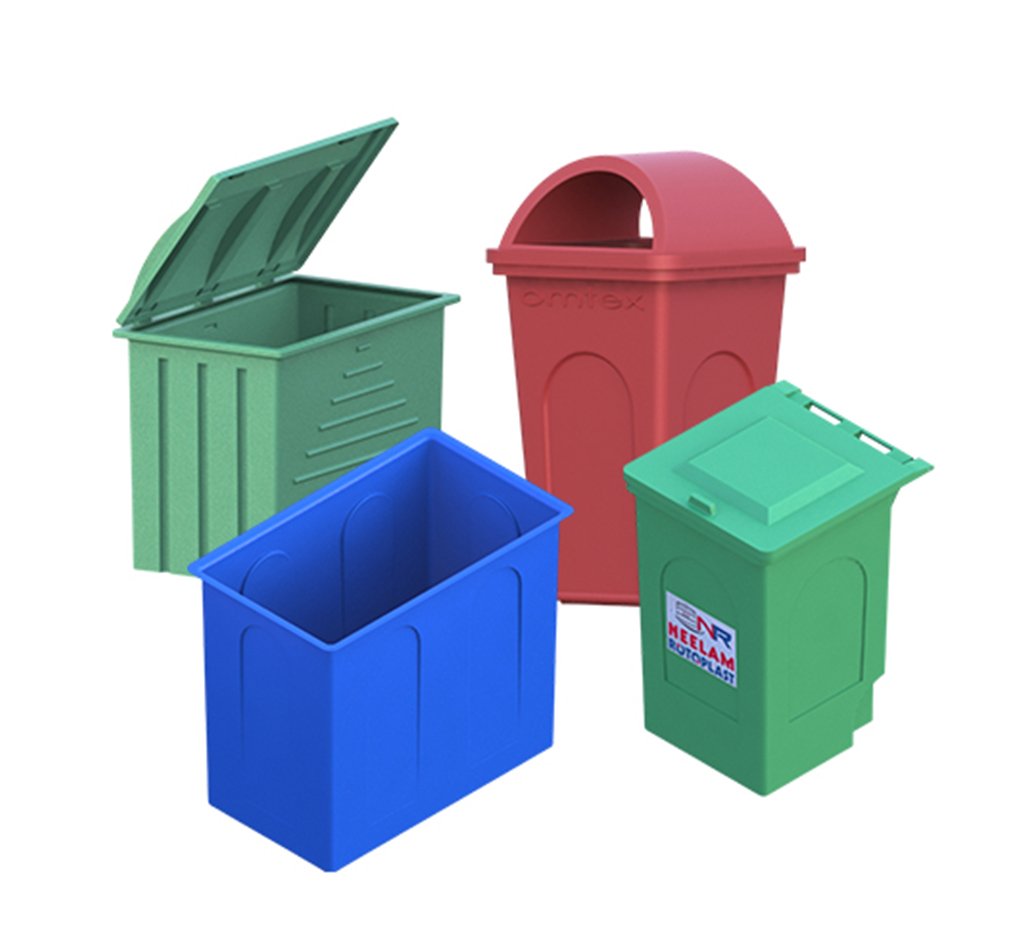
A plastic dustbin rotomoulding mould is a precision-engineered metal cavity used to manufacture dustbins through the rotational molding process. During production, plastic powder is heated and rotated inside the mould, allowing it to coat the inner surfaces evenly and form a seamless container.
The mould design determines the size, shape, and thickness of the dustbin. It also incorporates features such as lids, handles, and reinforcement structures to improve usability and durability. These moulds are commonly manufactured using mild steel or aluminum, which provide strength and efficient heat transfer during the molding cycle.
Proper mould design ensures that the dustbins produced are resistant to impact, chemicals, and environmental conditions, making them suitable for long-term use.
Key Features
Plastic dustbin rotomoulding moulds are designed with features that improve manufacturing efficiency.
- Strong metal construction for long service life
- Accurate cavity design for precise dustbin dimensions
- Reinforced structure for improved durability
- Uniform heat distribution during molding
- Durable clamping systems
- Resistance to repeated heating cycles
- Compatibility with rotomoulding machines
- Customizable designs for various capacities
- Smooth or textured surface finish options
- Low maintenance requirements
These features support the production of high-quality waste management products.
Technical Specifications
| Specification | Details |
|---|---|
|
Mold Material |
Mild Steel / Aluminum |
|
Manufacturing Method |
Fabrication / CNC Machining |
|
Capacity Range |
20 Liters – 1100 Liters |
|
Surface Finish |
Smooth / Textured |
|
Mold Structure |
Multi-Part |
Working Principle
Plastic dustbins are manufactured using the rotational molding process.
Material Loading
A specific quantity of polyethylene powder is loaded into the mould cavity.
Heating and Rotation
The mould is mounted on a rotating arm and placed inside a heating chamber.
Material Distribution
The molten plastic spreads evenly along the inner surface of the mould, forming the dustbin structure.
Cooling Phase
After proper coating, the mould is moved to a cooling station where the plastic solidifies.
This process ensures a seamless structure and consistent wall thickness.
Construction and Design Mechanism
The design of plastic dustbin moulds focuses on durability, functionality, and ease of production.
Mold Body
The mold body defines the overall shape and capacity of the dustbin.
Reinforcement Structure
The mould includes ribbing and structural support features to enhance strength.
Parting Line
The mould is divided into sections for easy removal of the finished product.
Clamping System
Heavy-duty clamps secure the mould sections during the molding cycle.
Venting System
Vents allow air and gases to escape during heating.
Mounting Arrangement
Mounting brackets connect the mould to the rotational molding machine.
Industrial Applications

Residential Areas

Municipal Services

Industrial Facilities

Commercial Establishments

Healthcare Sector
Advantages of Plastic Dustbin Rotomoulding Mould
Plastic dustbin moulds offer several benefits in manufacturing.
Seamless Construction
Rotational molding produces dustbins without joints, reducing leakage risks.
High Durability
Dustbins are resistant to impact, chemicals, and weather conditions.
Uniform Wall Thickness
Even material distribution ensures consistent strength.
Corrosion Resistance
Plastic materials do not rust or degrade easily.
Limitations of Plastic Dustbin Rotomoulding Mould
Despite their advantages, plastic dustbin moulds have certain limitations.
Longer Production Cycle
Rotational molding requires more time compared to some other processes.
Mold Weight
Large moulds can be heavy and require handling equipment.
Limited Material Options
The process mainly supports polyethylene materials.
Design Complexity Constraints
Highly intricate designs may be difficult to achieve.
Why Choose N Line Roto Pvt. Ltd.
N Line Roto Pvt. Ltd., formerly known as Neelam Roto Plast, was established in 1993 and has extensive experience in manufacturing rotational molding machines and moulds. The company offers a wide range of rotomoulding equipment and solutions for plastic product manufacturing industries.
The organization operates modern manufacturing facilities supported by skilled engineers and technical experts. It provides complete support including machine supply, mold manufacturing, installation services, and turnkey project solutions.
Under the leadership of Mr. Dinesh Panchal, the company has expanded its reach across domestic and international markets, supplying equipment to various industries worldwide.
Frequently Asked Questions (FAQs)
It is used to manufacture plastic dustbins through the rotational molding process.
Mild steel and aluminum are commonly used.
Polyethylene materials such as LLDPE and HDPE are typically used.
Dustbins ranging from small household sizes to large industrial capacities can be manufactured.
Yes, they are designed to withstand rough usage and environmental conditions.
By adjusting the amount of plastic powder used in the mould.
Yes, molds can be designed according to specific requirements.
The mould is opened after cooling and the dustbin is removed.
They are designed according to machine configuration.
Regular cleaning and inspection are recommended.
Yes, pigments can be added during manufacturing.
Yes, plastic dustbins resist rust and chemicals.
Residential, municipal, industrial, and healthcare sectors.
With proper maintenance, moulds can last for many production cycles.
Yes, specialized moulds support multi-layer structures.
Smooth or textured finishes.
Yes, they are designed for repeated use.
Some modifications may be possible depending on the design.
Yes, they are designed for outdoor environments.
Yes, it is widely used for producing durable waste management products.
Conclusion
Plastic dustbin rotomoulding moulds are essential tools for manufacturing durable and reliable waste management containers. Through the rotational molding process, these moulds enable the production of seamless dustbins with consistent strength and long service life.
With proper mould design and high-quality materials, manufacturers can produce dustbins that meet the demands of residential, commercial, and industrial applications. These moulds play a crucial role in supporting efficient production and maintaining product quality in modern plastic manufacturing.