Vertical Plastic Water Tank Mould
- Home
- /
- Vertical Plastic Water Tank Mould
Water storage is an essential requirement for residential buildings, commercial facilities, agricultural activities, and industrial operations. Among the different types of storage solutions available today, vertical plastic water tanks are widely used due to their space efficiency, durability, and ease of installation. The production of these tanks relies on specialized manufacturing tools known as Vertical Plastic Water Tank Moulds.
These moulds are designed to create upright cylindrical tanks through the rotational molding process. The mould acts as a precision cavity that shapes the molten plastic during the heating and rotation cycle. The quality of the mould plays a major role in determining the structural strength, wall thickness consistency, and surface finish of the final water tank.
A well-engineered mould allows manufacturers to produce tanks that are strong, leak-proof, and capable of storing large quantities of water safely. Because vertical tanks are commonly installed in homes, industries, and farms, the mould must be designed carefully to ensure reliability and long service life.
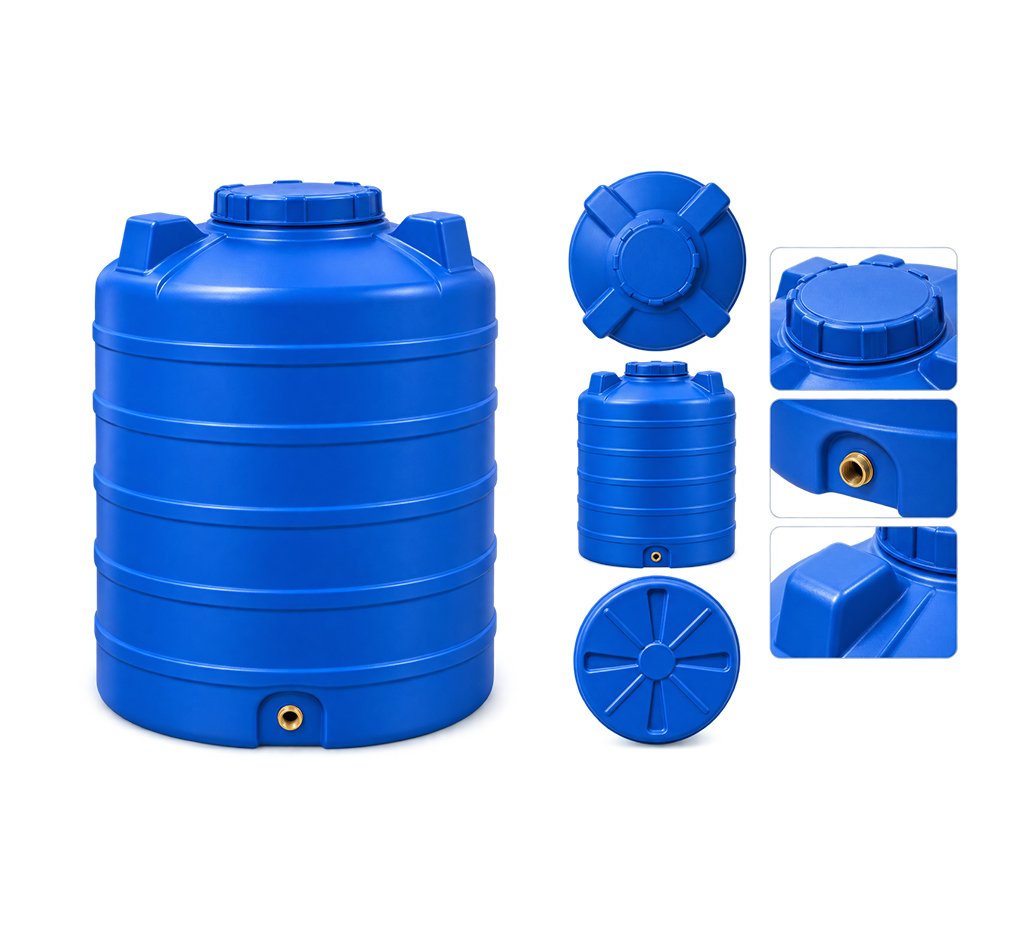
Understanding Vertical Plastic Water Tank Moulds
A vertical plastic water tank mould is a fabricated metal structure that forms the cavity used to manufacture upright water tanks using the rotational molding technique. During the molding process, plastic powder melts and spreads along the internal walls of the mould as it rotates, eventually forming a hollow tank with uniform thickness.
The design of vertical moulds focuses on creating a balanced cylindrical structure that maintains stability while holding large volumes of water. These moulds are commonly manufactured using materials such as mild steel or aluminum, as these metals provide strength and efficient heat transfer during the molding cycle.
Vertical tank moulds also include structural features like parting lines, clamping mechanisms, and venting systems. These elements ensure smooth operation during production and allow the finished tank to be removed from the mould without damaging its structure.
By enabling the manufacturing of seamless plastic tanks, these moulds play a vital role in water storage product manufacturing.
Key Features
Vertical plastic water tank moulds are developed with several features that support reliable manufacturing.
- Strong metal construction for long operational life
- Accurate cylindrical cavity design
- Efficient heat transfer during molding
- Durable clamping mechanisms
- Smooth internal surfaces for improved tank finish
- Resistance to repeated heating cycles
- Compatibility with rotational molding machines
- Customizable mold sizes for different tank capacities
- Easy opening and closing structure
- Minimal maintenance requirements
These features enable manufacturers to produce high-quality water tanks consistently.
Technical Specifications
| Specification | Details |
|---|---|
|
Mold Material |
Mild Steel / Aluminum |
|
Manufacturing Method |
Fabrication / CNC Machining |
|
Product Capacity |
200 Liters – 10,000 Liters |
|
Surface Finish |
Smooth / Textured |
|
Mold Structure |
Multi-Part |
Working Principle
The manufacturing of vertical plastic water tanks using a mould follows the rotational molding process.
Material Loading
The required quantity of plastic powder, typically polyethylene, is loaded into the mould cavity before the molding cycle begins.
Heating and Rotation
The mould is mounted on the rotating arm of a rotational molding machine and placed inside a heated chamber.
Material Coating
The molten plastic spreads evenly across the inner surface of the mould, forming the structure of the tank.
Cooling Phase
Once the material is distributed properly, the mould moves to a cooling station where the plastic solidifies while the mould continues rotating.
This process ensures seamless construction and consistent wall thickness.
Construction and Design Mechanism
The structural design of vertical tank moulds is developed to support efficient heat transfer and accurate tank formation.
Mold Body
The mold body creates the cylindrical cavity that determines the shape and capacity of the tank.
Parting Line
The mould is usually divided into sections that can be opened after the cooling cycle to release the tank.
Clamping System
Heavy-duty clamps or bolts secure the mould sections together during the heating and rotation stage.
Venting Arrangement
Vents are provided to allow trapped air and gases to escape from the cavity.
Mounting Brackets
Mounting brackets connect the mould to the rotating arm of the molding machine.
Internal Surface Finish
The internal surface may be polished or textured to achieve the desired finish on the water tank.
Industrial Applications

Residential Sector

Agriculture

Construction

Commercial Buildings

Industrial Facilities
Advantages of Vertical Plastic Water Tank Mould
Vertical tank moulds provide several benefits in plastic tank manufacturing.
Seamless Tank Production
Rotational molding produces tanks without joints, reducing leakage risks.
Uniform Wall Thickness
Material distributes evenly inside the mould during rotation.
Space-Efficient Tank Design
Vertical tanks require less installation space compared to horizontal tanks.
Strong Structural Performance
Proper mold design helps produce tanks capable of handling heavy water loads.
Limitations of Vertical Plastic Water Tank Mould
Despite their benefits, vertical tank moulds also have certain limitations.
Longer Production Time
Rotational molding cycles can take longer compared to other molding processes.
Mold Weight
Large moulds can be heavy and may require lifting equipment.
Limited Material Compatibility
The process mainly supports polyethylene materials.
Surface Detailing Limitations
Extremely intricate design patterns may be difficult to achieve.
Why Choose N Line Roto Pvt. Ltd.
N Line Roto Pvt. Ltd., formerly known as Neelam Roto Plast, was established in 1993 and has developed significant expertise in the field of rotational molding machinery and mould manufacturing. The organization manufactures various types of rotomolding machines, molds, and supporting equipment used in plastic product manufacturing.
The company operates with modern manufacturing facilities and a skilled team of engineers and technicians who focus on delivering reliable machinery solutions. In addition to supplying machines and moulds, the organization also provides consultancy, installation assistance, and turnkey project solutions for businesses entering the rotational molding industry.
Under the leadership of Mr. Dinesh Panchal, the company has built strong relationships with customers across different regions and continues to export machinery and equipment to several international markets.
Frequently Asked Questions (FAQs)
It is used to manufacture upright plastic water storage tanks through rotational molding.
Mild steel and aluminum are typically used.
Polyethylene materials such as LLDPE and HDPE are commonly used.
Tanks can range from small household sizes to large industrial capacities.
Yes, they are commonly used in homes and apartments.
The quantity of plastic powder loaded into the mold.
With proper maintenance, moulds can operate for many production cycles.
Yes, molds can be developed according to specific tank designs.
The mould is opened along its parting line after cooling.
Yes, they offer strong structural properties and corrosion resistance.
Yes, specialized moulds support multi-layer tank manufacturing.
They are designed according to machine configuration.
Regular inspection and cleaning are recommended.
Yes, pigments can be added to the plastic material.
Residential, agricultural, industrial, and commercial sectors.
Some design modifications may be possible depending on the structure.
Smooth or textured finishes can be produced.
Yes, it is widely used for large water storage tanks.
Polyethylene tanks are resistant to rust and corrosion.
Yes, they are simple to install and require minimal maintenance.
Conclusion
Vertical plastic water tank moulds are essential tools used in the production of upright water storage tanks through the rotational molding process. Their design ensures that plastic material spreads evenly during heating and rotation, allowing manufacturers to produce strong and seamless tanks.
Because vertical tanks are widely used for residential, agricultural, and industrial water storage, the quality of the mould plays a critical role in achieving consistent product performance. With proper engineering, durable materials, and regular maintenance, vertical tank moulds can deliver reliable manufacturing results across long production cycles.